


This is a project that learners can do for a few minutes each week of the year. You can introduce variety into the tasks or keep them the same and rotate them around groups in your class.
- Data Literacy Using PPDAC (Problem, Planning, Data, Analysis, Conclusion) to process data and come to a conclusion.
- Digital Literacy To access the data and understand in simple terms the workings of a sensor.
- Numeracy Analyse the data — averages, peak values, graphs, time, comparison and correlation.
- Science Understand what is causing variations in CO₂, Temperature, Light and Humidity.
- Language Present and discuss conclusions.
What do I need?
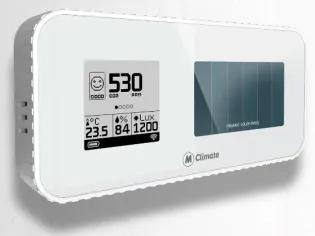
MClimate Solar CO₂ Sensor
You need one or more sensors from the IOT in Schools project. One sensor will allow you to monitor the environment in one location. Two would allow for a comparison between the classroom and another environment.
You should have at least four sensors in each school.
What do I do now?
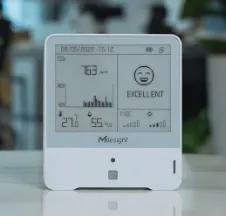
Milesight AM307
Ask the learners to place the sensor somewhere in the classroom. It depends on what they want to measure — they might want to experiment, which will be a good discussion point.
Note that if the sensor is an MClimate CO₂ model, it will likely require light to power it — sunshine, classroom lights, or daylight. Pupils can monitor the battery level, which changes depending on how much light it receives.
If you have more than one sensor, or are working alongside another class, sensors can be placed wherever they will give learners the most to investigate.
Find the data for your sensor
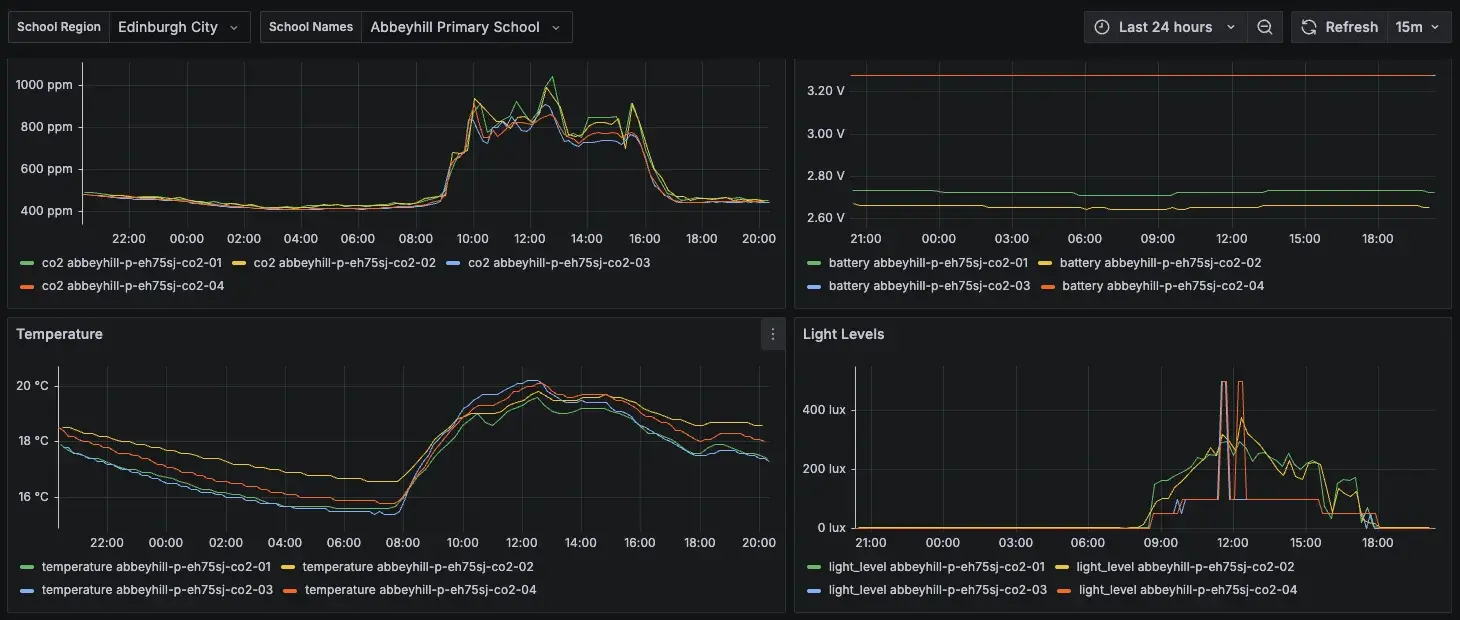
School Sensor Dashboard
View live and historical data from your school’s sensors. Explore temperature, CO₂, humidity and light readings across all connected classrooms.
Open the Dashboard →Learner-led investigations
Let the learners decide what they want to investigate. Here are some questions that might spark their curiosity — open each group to explore ideas:
- What is CO₂ and where does it come from? Where does it go when it reduces?
- Does the CO₂ level in our classroom change throughout the school day, and when is it lowest and highest?
- How does opening windows for 5 minutes affect temperature and CO₂ levels?
- Is our classroom warmer in the morning or afternoon, and why might that happen?
- Does the humidity change on rainy days compared to sunny days?
- How long does it take for our classroom to warm up after we arrive in the morning?
- Do different classrooms have different temperatures at the same time, and why?
- Which classroom has the best air quality (lowest CO₂) and what makes it different?
- Does our classroom get stuffy faster on hot days or cold days?
- How does the temperature inside our classroom compare to outside during different times of day?
- Is humidity higher inside or outside, and does this change with the weather?
- On very cold days, how much warmer is it inside compared to outside?
- Does indoor temperature stay more stable than outdoor temperature throughout the day?
- When it rains heavily outside, does humidity inside our classroom increase?
- How long does it take for outdoor temperature changes to affect indoor temperature?
- Which part of our classroom gets the most natural light during the day?
- How does light level change on cloudy days versus sunny days?
- Does the position of the sun affect how much light comes into different parts of the room?
- How much does turning on classroom lights change the sensor readings?
- What time does our classroom become bright enough that we don’t need electric lights, in different seasons?
- Do north-facing and south-facing classrooms get different amounts of natural light?
- Does the classroom temperature increase when more people are in the room?
- How quickly does CO₂ build up during lessons, and how fast does it drop at break time?
- Can we predict what time of day it is just by looking at our sensor data patterns?
- Does the classroom feel stuffier when there are more people in it?
- How does having PE affect temperature, humidity and CO₂ compared to a normal day?
- Can we use our indoor temperature data to predict the weather outside?
- How many days does it take for a cold front outside to affect the temperature inside our building?
- Can we find patterns between outdoor weather conditions and when our classroom feels most comfortable?
- Does wind speed outside affect how quickly our classroom temperature changes?
- On the hottest and coldest day of the month, what’s the biggest difference between indoor and outdoor temperatures?
Published 30 June 2026 | Contact us